


Orbital vs Reciprocating Shaker: Which Lab Shaker Do You Need?
Almost every laboratory needs a shaker, but not every shaker suits every job. The two most common types, orbital and reciprocating, look similar on a bench and work very differently. Picking the wrong one can mean poor mixing, foaming or uneven extraction. Here is how to choose.
What Is the Difference?
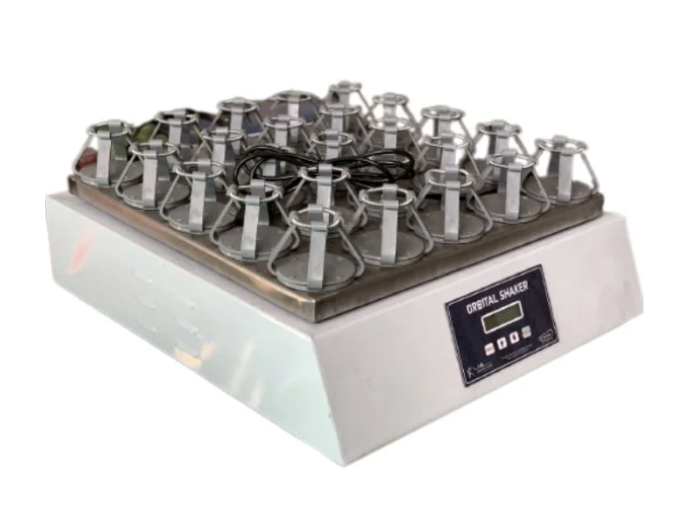
An orbital shaker moves its platform in a smooth circular path, which gently swirls liquids in flasks and plates. A reciprocating shaker moves back and forth in a straight line, giving more vigorous agitation for extractions and separating funnels. Orbital suits cell culture and general mixing; reciprocating suits extractions and solubility work.
Side by Side
| Factor | Orbital Shaker | Reciprocating Shaker |
|---|---|---|
| Motion | Circular, smooth | Linear, back and forth |
| Mixing intensity | Gentle to moderate | Moderate to vigorous |
| Typical uses | Cell culture, staining, dissolving, general mixing | Extractions, separating funnels, soil and food testing |
| Foaming risk | Low | Higher at high speed |
| Common vessels | Flasks, beakers, plates | Flasks, tubes, separating funnels |
When to Choose an Orbital Shaker
Choose an orbital shaker for microbiology, cell culture, staining and destaining gels, and any work where gentle, uniform mixing matters. Combined with temperature control, an incubator shaker keeps cultures at a steady temperature while mixing. See our orbital shaker for general laboratory use.
When to Choose a Reciprocating Shaker
Choose a reciprocating shaker for liquid-liquid extractions, soil analysis, food testing and other procedures that need strong, repeatable agitation. Our reciprocating shaker is built for these routine extraction tasks.
Other Specialist Options
- Orbital and linear shaker: one unit that offers both motions.
- Wrist action shaker: mimics hand shaking, ideal for separating funnels.
- Gel rocker: gentle rocking for staining and blotting.
- Shaking water bath: mixing with precise water temperature control.
What to Check Before Buying
- Speed range in rpm and how stable it is under load.
- Orbit or stroke length, which affects mixing intensity.
- Platform size and maximum load.
- Clamps and accessories for your flask sizes.
- Timer, digital display and continuous duty rating.
Frequently Asked Questions
Can one shaker do everything?
Combination orbital and linear shakers cover many needs, but specialist work often benefits from a dedicated unit.
What speed should I use?
Follow your method. Start low and increase gradually to avoid spills and foaming.
Do shakers need calibration?
Speed and timer accuracy should be checked periodically, especially in regulated labs.
Explore our full laboratory shaker range or contact us for advice on your application.