


How It Works
Same powder. Same operator. Two runs, and the 75-micron fraction moves by three points. When that happens, the sample is rarely the culprit. Most drift traces back to five things at the sieve stack: load, mesh condition, moisture, time and motion. Here is where each one breaks.
Why Do Sieve Results Drift Between Runs?
Sieve results drift when the test conditions change between runs, not when the powder does. The usual causes are overloaded sieves, blinded or worn mesh, moisture pickup, inconsistent sieving time, and the wrong agitation motion for the sample. Fix those five and repeatability usually follows.
Overloaded stacks and blinded mesh
A sieve works like a crowded doorway. Particles need room to find an aperture. Pour in too much sample and the fines sit on top of the coarse fraction, never reaching the mesh, so your “retained” figure quietly inflates. Cut the load until the bed is one or two particles deep.
Blinding is sneakier. Near-size particles wedge into the apertures and shrink the open area with every run. Brush the underside of the mesh with a soft brush. Never poke the wires with a pin, because one bent wire changes the aperture for good.
Moisture, static and the sieving endpoint
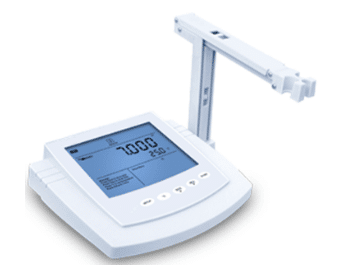
Hygroscopic powders gain water in a humid week, and damp particles clump into false “coarse” material. Check moisture before you sieve, not after the numbers look odd. A halogen moisture meter gives you a loss-on-drying reading in minutes.
Then there is time. Many labs set a timer once and never revisit it. A better endpoint, borrowed from ASTM C136, is that sieving is done when less than 1% of the retained mass passes through in one further minute. Run that check once during method validation, then lock the timer.
Tap or Gyratory: Matching Motion to Your Sample
Motion is the variable people forget. A shaker that suits river sand can wreck a friable granule. If you grind your sample first, fineness matters as well; our post on getting sample fineness right with a lab pulverizer covers that step.
| Motion | Suits | Watch out for |
|---|---|---|
| Tap + rotary (RoTap type) | Dry, free-flowing granules: minerals, aggregates, fertiliser | Friable particles can fracture |
| Gyratory | Mixed sizes, fine powders | Slower on coarse fractions |
| Electromagnetic | Fine or fragile powders needing controlled amplitude | Amplitude must be validated |
Where tap action wins
Hard, dry, free-flowing material. Tapping drives particles down through the stack fast, which is why it became the default for aggregates and minerals decades ago.
Where gyratory or electromagnetic wins
Fine cohesive powders and anything breakable. Here is a trade-off most datasheets skip: the longer a tap shaker runs on a friable sample, the finer the sample gets. Your result then reflects run time as much as the material. Do a time study. Sieve at 5, 10 and 15 minutes, plot the retained mass, and pick the point where the curve flattens.
A Repeatability Routine That Takes Ten Minutes
Before every run
- Inspect the mesh against a light for dents, tears and blinded zones.
- Weigh a fixed sample mass. Don’t eyeball it.
- Dry hygroscopic samples to a consistent moisture level.
- Use the validated time and amplitude, every run.
Every quarter
Check your test sieves against the aperture tolerances in ASTM E11 or IS 460, whichever your method cites. Run a reference material through the stack and log the result. If a sieve fails or shows visible damage, retire it. A cheap mesh costs less than one rejected batch.
Not sure which motion fits your material? Browse the full laboratory shaker range or contact the Samara Instruments team with your sample type and throughput. They quote against your application, and they also provide installation and training.